50 million-year-old lemur fossil added to University of Nebraska State Museum
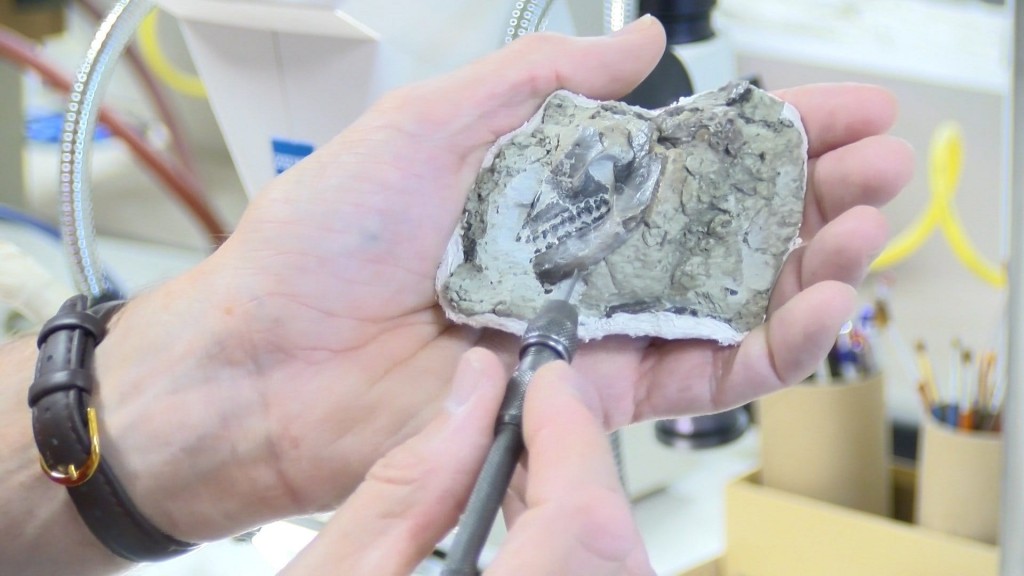
Using tools, Rob Skolnick is working in the lab removing sediment from a 50 million-year-old lemur fossil.
It’s the first fossil primate skeleton for the University of Nebraska Museum collections.
“Primates are super interesting because they include humans so we are talking monkeys, apes, lemurs and humans,” Preparator, Rob Skolnick said.
The lemur named Kirby was originally found in Wyoming. Over 70 million years ago, temperatures were the warmest and conditions were tropical around the globe including Wyoming and Nebraska.
The fossil was collected in 2018 at a Museum in Washington and now Nebraska has the chance to unveil the skeleton.
“Every day some more of it is being exposed, so it’s exciting,” Chief Preparator, Carrie Herbel said.
With over 30 years of experience, Skolnick says he has never worked with this type of skeleton before.
The chunks of rock were sent to the Nebraska Medical Center for a CAT Scan.
“The bones just jump out once you get the X-ray and that is like a road map for me when I go in and try to move the bones from the rock,” Skolnick said.
Skolnick is chipping at this alone and expects it to take months.
More information about Kirby the Lemur may be discovered as the fossils are removed and studied by university researchers.
“You never know exactly what is in there and what you are going to find so it’s always a surprise,” Skolnick said.
You can take a look at the progress of the fossil at Morrill Hall’s Visual Lab. The museum recently opened their $11.4 million expansion.