Homestead the Future: space travel and learning from the past
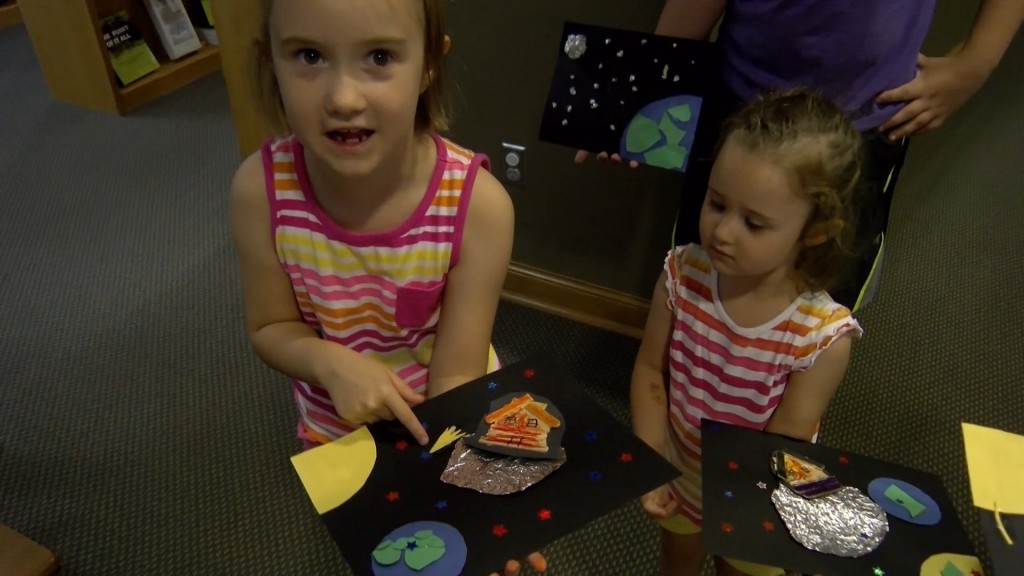
An event at the Homestead National Monument is introducing kids to the concept of pioneering the future on the 50th anniversary of the Apollo 11 landing on the moon.
Today’s event brought the everyday struggles of the Homestead act of 1862 and compared it to the understanding of pioneering space as the last frontier.
As part of the Kids and Parks Program, the theme being what it takes to survive out on the homestead of the future.
“What trials homesteaders would have faced and what lessons we can learn from their experiences and apply that to the future concept of homesteading other celestial bodies,” Summer Kids and Parks Program coordinator and National Park Ranger David Graveline said.
“The Earth is gonna become too polluted for us to live on here anymore, so we’re gonna have to send people to go out to visit other planets,” guest to the event, Bryson Batse said.
This provides similar concept to the discomfort at the time of staying in a crowded Europe.
The lesson included scenarios which future homesteaders could encounter, like strange life they’ve never seen before, or unfamiliar weather they’ll have to improvise with.
“Homesteaders really were like Buzz Aldrin and Neal Armstrong, whereas they were going to a new world and having to survive and be creative and inventive just to survive,” Graveline said.
Graveline describes the biggest challenge that our past homesteaders did not face.
“Oxygen, it’s something we don’t think about homesteaders needing here on earth.”
Bryson says what he learned is close to the movie “The Martian” and draws the same sort of picture with the difficulty in homesteading a planet without an oxygen rich atmosphere.
“If you have a greenhouse, the plants will make their own atmosphere, and after a while it will make whatever planet that you went back on, will make a new atmosphere like here on earth.”
As for any homesteaders of the past and the future, one thing will never change, “they really were stepping foot onto an alien world for them,” Graveline said.
This concept is not far off, and could be a foreseeable future as companies are already racing to understand how to terraform and colonize Mars.
Tonight’s campfire event with space scientist Dr. Tim Livengood will be held from 7 to 9 and will be moved indoors at the Education Center. It will be followed by telescope viewing from 9 to 11:30 at the Heritage Center.