Nebraskans struggling with ticks earlier than expected
As the weather warms up, those pesky summer bugs make their return – mosquitoes, flies, and ticks.
But this year, many Nebraskans say they’ve been seeing tick problems pop up a lot sooner than they’re used to.
For Connie and Irvin Stall, they’ve lived in their home for 40 years. Since it’s surrounded by a heavily wooded area, they’ve always had run-ins with ticks. But Connie says never like this.
“I sit out on my porch and I come in and I literally have ticks crawling on me from being outside,” Connie said.
They also have their dog Sassy, who they are now keeping an even closer eye on when she goes outside.
“I wasn’t in the grass when I had my ticks, so you just check her, you check her all the time and you make sure she doesn’t have them in her ears,” Connie said.
Dr. Roberto Cortinas, Assistant Professor of Practice with the UNL Veterinary Medicine Program, says seeing ticks this early on means those are the ones that survived the winter.
“The expectation was, ‘Oh, we have this really cold weather, we’re not going to have any ticks’, but that’s not the case – we also had a lot of snow, so that helps to protect those ticks,” Cortinas said.
Since ticks are no stranger to Nebraska, it all comes down to protecting yourself and your pets from a potential bite.
Dr. Cortinas says Lyme disease doesn’t have an established presence here in Nebraska, but ticks in the state do still carry diseases.
He recommends using barriers whenever you’re out in a wooded area, like long sleeves and long pants, and products like Deet to repel the ticks. For your pet, talk with your veterinarian about possible collars or topical products to keep them protected.
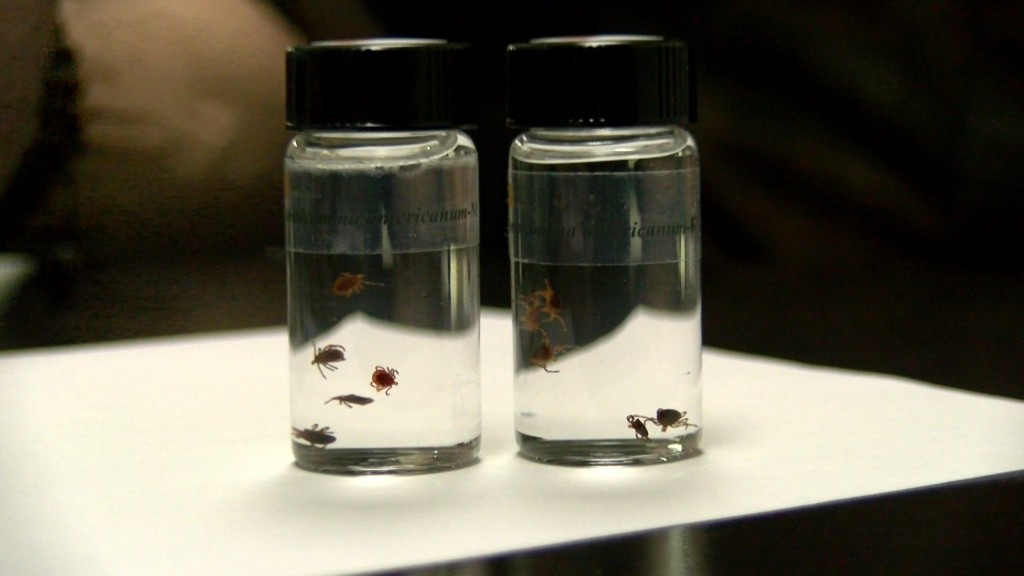
If you find a tick imbibed, or latched, on you or your pet, meaning they’ve latched themselves onto the skin, you can pull it out with a pair of tweezers, clean the wound, but most importantly: keep it in a small container with some rubbing alcohol.
That way, if the wound becomes infected or you become ill, you can take the tick to the doctor or vet for them to test and see what diseases it may have.
For Connie and Irvin, keeping the ticks off seems like an impossible task.
“I said next to having a flee and tick collar on yourself, I don’t know what you do!” Connie said.
But they and many other Nebraskans like them won’t have to worry long, as tick season usually ends right around the 4th of July.
Dr. Cortinas also wants to encourage people to keep any ticks they find on themselves or their pets, imbibed or not, and send them into his office to be studied.
That address is:
113 VBS, UNL, East Campus
P.O. Box 830905
Lincoln, NE 68583-0905
Or you can contact him at rcortinas@unl.edu.