As the War in Iran persists, the pharmaceutical industry sees major delays with medications
LINCOLN, Neb. (KLKN) – As the war in Iran persists, much uncertainty has been created around access to the Strait of Hormuz.
One Lincoln pharmacist says the pharmaceutical industry is feeling the effects of supply chain disruptions.
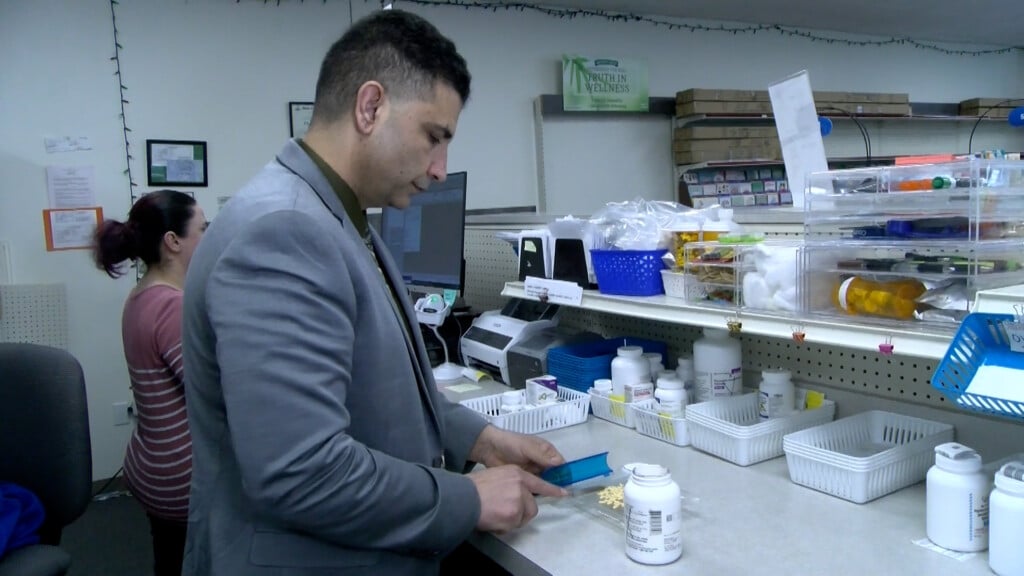
Faheem Rashidi has been a pharmacist for over 25 years and says he’s never seen as many medication delays as he’s seeing now.
“It’s never an easy conversation when you have with a patient, to tell them that we don’t have their medications, and we’re working on it,” said Rashidi.
He says about 70% of generic medications are imported from overseas, and delivery delays can have dire consequences.
“Any disruption, whether it’s in the Strait of Hormuz or just bringing something from Canada, will impact; if you don’t get that ingredient or medication on time to the US market, you are delaying the treatment of somebody somewhere in the US,” said Rashidi.
He says pharmacies usually have at least a month’s supply of their most popular meds, but without any deliveries coming in, that stock is not being replenished.
Rashidi’s biggest concern is antibiotics and other medicines used for chronic treatment.
When a medication is out, he’ll talk with the patient’s doctor about a substitute, but says it’s never an exact swap.
“We will do our best effort to make sure we get the medication that is exactly the same, but it’s not always the case,” said Rashidi.
Beth Fritz says she has been going to Lincoln Pharmacy for several years.
“It’s a small town family. I mean, they’ve been my family. They’ve been with me through thick and thin for the last three years,” said Fritz.
She says she’s noticed the delays for about four weeks now, and she’s not the only one; “My sister has had some delays with her stuff and my daughters.”
Fritz’s mother also shares this experience when she needed an antibiotic to fight a serious infection, but had to wait, and ultimately, drove over an hour away to Omaha for it.
When asked what she did in the meantime, she responded, “Well, we waited. We had to.”
Rashidi says he tells all his patients to give them at least a week’s notice before they run out of meds, so that if the pharmacy doesn’t have it, he can call other pharmacies or a doctor’s office to find a replacement.