Nearly 50 testify against bill to lower property taxes via sales tax increase
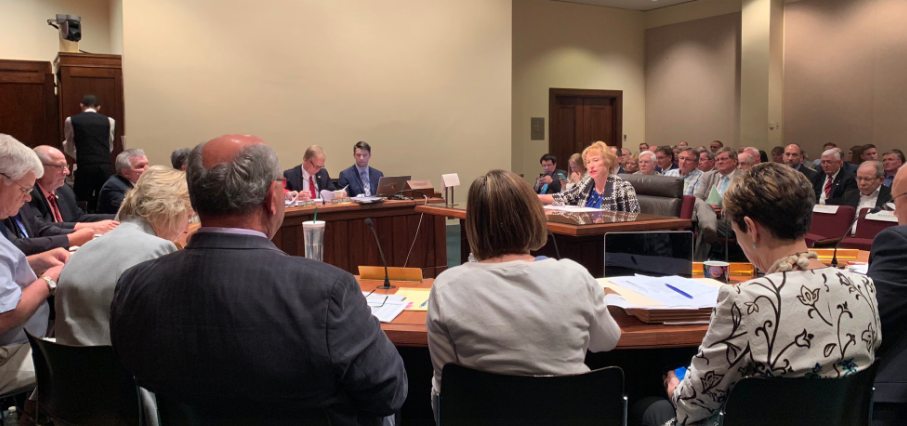
After seven hours of testimony, the revenue, retirement and education committees called it a night without making any decisions on the future of amendment 1381 to LB 289.
49 testified against the bill, 12 testified in the neutral position and 4 testified in support.
The bill would increase state aid to K-12 schools by $540 million dollars, therefore reducing property taxes.
The money would come from a three-quarter-cent sales tax increase across the board and remove the tax exemptions on candy, soda and bottled water. It would also increase the tax on cigarettes and home purchases. Services provided by plumbers, HVAC employees, movers and veterinarians would also be subject to sales taxes under the bill.
It was many of those affected by the increased taxes that stood up in front of the senators.
Blaine Wilcoxen who represents mechanical contractors and heating and cooling contractors said many Nebraskans don’t have the budgets to pay for HVAC and plumbing services as it is, let alone with the new tax.
“Sanitaion and drinking water are imperative to Nebraskan’s health,” he said. “These are not luxury services or things that are nice to have, building codes require these services.”
Matt Innis, an independent electrical and cabling contractor said this puts jobs on the line.
“When services get more expensive people cut back on hiring guys like me,” Innis said.
A supporter of veterinary services said the tax would increase the number of animals euthanized in the state because low income citizens won’t be able to afford medical care for their pets.
Administrators for school districts also showed up in opposition as they said the decrease in land valuations and the amount districts would be able to levy would put big districts, with big needs, at a disadvantage.
Liz Standish, associate superintendant for Lincoln Public Schools estimated the district would lose at least $2.3 million dollars if the bill were passed.
“We believe we could be growing, our city could be growing and our revenue per student shrinking under this proposal,” Standish said.
Governor Ricketts is also opposed.

In a press conference a few hours before the hearing began he said this method has been tried before and doesn’t create long term property tax relief.
“Raising taxes perpetuations the cycle of more government spending,” Ricketts said. “This isn’t going to work, we tried it in the 90’s, we tried it in the 2000’s, it just means more taxes and more spending.”
Landowners also showed up in droves.
“Property taxes are too high,” Art Neitfeld a farmer in Diller, Nebraska said.
He is one of four who testified in support of the bill.
“We need property tax relief, farmers pay a lot of sales taxes too, and this has them going up but we can live with that, I think,” Neitfeld said.
The president of the Nebraska Farm Bureau officially took a neutral stance on the bill, but said he is in support of the sales tax increases.
“There’s been a major shift onto property taxes in the last few years,” Steve Nelson said. “Particularly in agriculture but in commercial and residential as well and we need to balance the resources.”
Not every farmer agrees this is the right plan, despite knowing the pain of getting those property tax bills all too well.
Fritz Oltjenbruns, a Missouri farmer whose family tended to land in Lancaster County for 150 years before being driven out of the state by property taxes said spending cuts would be ideal.
“When I don’t have money, I stop spending. I don’t know why the unicameral can’t do the same,” Oltjenbruns said.
He drove four hours to testify Thursday, he said he was invited by the governor to speak against the bill, but said he agrees with just about everyone who spoke, no matter which side they were on.
“I’ve never met a farmer who thinks ‘well I don’t want my kids to be education, or my roads paved, we don’t want an inner city child starving,” he said.
His priority isn’t political, it’s personal.
“I want to see lower ag tax rates. I hate to see taxes go up on services, but as long as they insist on spending more the revenue’s got to come from somewhere and there are going to be winners and losers, but for the past 15 years ag has been the loser, maybe it’s someone else’s turn.”
The committees adjourned after the long testimony and didn’t vote on whether or not the amendment to LB 289 will advance.