Police service dogs train to become vital members of law enforcement
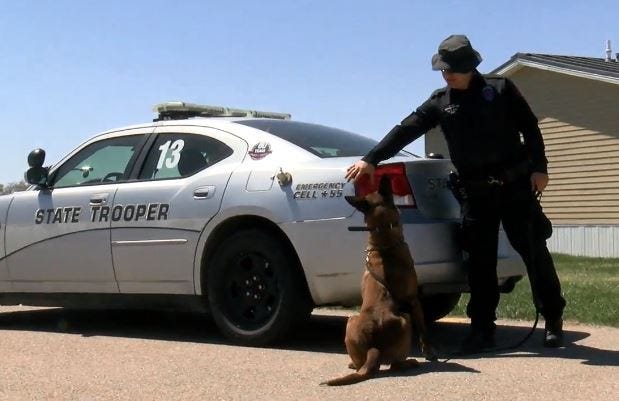
GRAND ISLAND, Neb. — The Law Enforcement Training Center in Grand Island was busy on Wednesday as some four-legged friends were training to become vital members of their future agencies.
Police service dogs go through a 13-week training in patrol and either narcotics or explosives.
Barking at their target is just one tactic these police service dogs learned to help notify their handler they’ve found someone.
“We use the dog’s inner motivation, their drives and we manipulate those drives to get the behaviors that we want,” said a Nebraska State Patrol trooper and police service dog handler Brent Potthoff.
The Nebraska State Patrol (NSP) currently has seven police service dogs, while three more are on their way to becoming members of the team.
The dogs go through six weeks of detector training in either narcotics or explosives and another seven weeks in patrol or apprehension training.
“Dogs are a huge benefit in various ways. The detector function of it is say in dope work to find narcotics, it helps us vastly say on the interstate or even in town for local drug transactions to be able to get probable cause to search a vehicle where we suspect there is criminal activity occurring,” said Potthoff.
For explosive detector dogs, it’s slightly different.
“Same as the narcotics, it’s all the same as they go through the same camp. It takes six weeks-ish and maybe a little bit longer because he is currently on 21 odors. The narcotics dogs are on four odors. To start out he learns 18 of them and then during his state standard certification, it’s a little different certification process than narcotics because of the different odors and venues that he would encounter in a normal day of work,” said an NSP explosive detector dog handler Austin Donner.
You may wonder how they get the dogs to adapt to the smell of odors.
“We put toys, anything that’s safe for the dog to chew on and can absorb odor. We put that in an airtight box for a while so it permeates the odor onto those toys, the toy absorbs the odor. Then we use that as a toy so after the dog finds say a heroin find like we saw earlier today, we’ll give them a toy that smells like heroin and they’ll chew on that, which helps with the scent memorization but it also helps connect the dots for them that ‘hey I did a good job because this toy smells like what I just found’,” said Potthoff.
The training will finish this June and the next session will be starting in the fall.