Revenue committee hears bills to cut property taxes, raise sales taxes
Nebraskans from border to border are calling for property tax relief.
One of those is Knox County farmer Jeff Uhlir.
“Our tax rates have gone up at a rate of 300 percent over the last ten years,” Uhlir said.
He’s grows corn and soybeans on the land his family’s farmed for more than 100 years, and it gets harder and harder.
“I’m trying to figure out how to keep it and hold on,” he said. “I don’t want to be the weak link in my family tree a hundred years from now who lost the family farm.”
He drove four hours to share his story in front of the legislature’s revenue committee Thursday morning.
He’s not alone. We’ve heard from several farmers this year about how their property tax bills are pushing them out of the industry.

Senators Tom Briese and Curt Friesen are starkly aware of these issues and proposed bills to address the problem that ties back to how education is funded in the state.
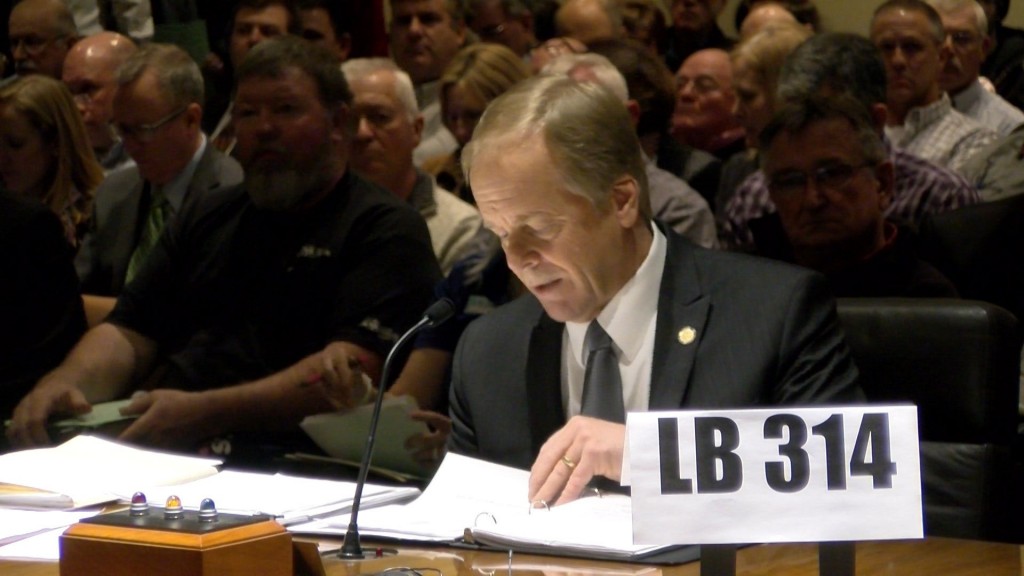
Briese proposed LB-314, it would raise more than $500 million dollars for the property tax relief credit fund and provide more than $200 million for education funding.
It would raise that revenue through various sales tax increases.
It would get rid of the tax exemption of candy, pop and bottled water. It would increase the tax on cigarettes to more than $2 and raise the tax on alcohol significantly.
Friesen’s bill, LB 497, focuses on changing the way the state funds education.
It would require the state to provide 50 percent of every district’s basic funding needs, taking the burden off property taxes.
It would require raising more than $500 million dollars in new revenue. That’d come from sales tax increases too. He proposes getting rid of the sales tax exemption on all groceries and several services as well as steep increases in alcohol and cigarette taxes.
The Farm Bureau has picked Friesen’s bill as their choice for relief.
Though not everyone supports the proposals.
Bryan Slone, president of the Nebraska Chamber of Commerce, said raising new revenue isn’t the answer. He said the school aid formula and local spending needs to be addressed first.
“We’ll continue eating up the increase in taxes, without addressing the problem,” Slone said.
Others said the bills were going to create more problems by taxing groceries.

“This tax shift pulls millions out of the pockets of consumers,” Cathy Siefken said. “The reduction in disposable income will result in fewer dollars to purchase food.
Siefken is in charge of the Nebraska Grocery Industry Association.
She said the increase would cut the amount of money people spend on groceries by more than seven percent and cost families an extra $15 per week.
Briese said his bill does include tax credits to renters and low income families he hopes will make up for the increase in sales taxes.
If the bills make it out of the revenue committee they’ll be heard in front of the entire legislature, eventually requiring 33 votes before hitting Governor Pete Ricketts desk.
Ricketts, who has his own ideas on how to reduce property taxes, said he will not raise taxes to provide tax relief.