UNL center receives 11 million for obesity and related disease research
On Monday, The Nebraska Center for the Prevention of Obesity, (NPOD), RECeiVED AN 11 MILLION DOLLAR GRANT.
IT’S TO CONTINUE STUDIES TO FIGHT OBESITY AND OTHER RELATED DISEASES BY LOOKING AT WHAT WE EAT ON A MOLECULAR LEVEL.
NPOD aims to become a leader in the prevention of obesity and diseases, like type 2 diabetes, cardiovascular disease and non–alcoholic fatty liver disease.
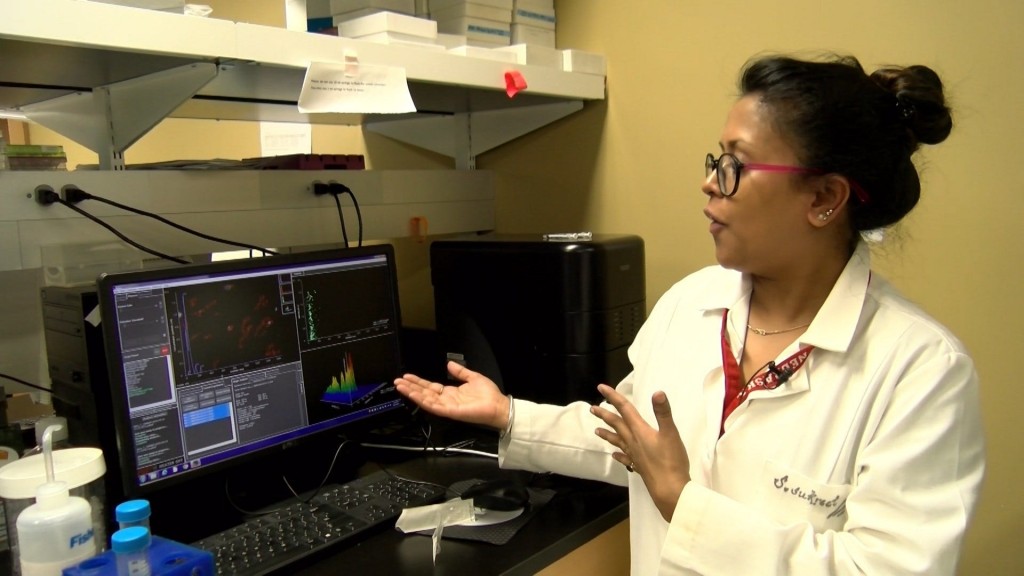
One student in the lab was studying a bio active in milk, called exosomes which may be a key factor to fight obesity disorders.
“I’m trying to count the particles from one gallon of milk, how many particles I have got. There have been studies in our lab which have shown that these bioactives can regulate disorders overall,” said SONAL SUKREET, a graduate UNL student.
She adds that the study continues under Dr. Janos Zempleni’s lead.
Zempleni says another investigator at the center is working to add antioxidants to food to decrease inflammation.
“Small changes in diets like we are investigating in our center, can have major impact on improving the outcome to obesity, or preventing obesity,” said Zempleni.
He adds that the grant gives the center funds to buy tools and machines the program would normally would not be able to afford.
“Normally the state would not be able to afford this but since this is an research core shared facility, our center members and other users can come use the equipment for a very low cost,” said Zempleni.
Zempleni adds that it allows students to learn more and find ways to combat obesity through research.
The center started five years ago with an 11 million grant and this one give the center five more years to study the issues.
Zempleni says the grant not only supports the study of fighting obesity, but also helps the university recruit top students and staff to the Nebraska.
“It’s all about workforce development in the state of Nebraska,” said Zempleni . “It helps us to retain top students, helps us to recruit or steal top talent from surrounding states and they do learn very advanced or cutting edge technologies as far as molecular levels are concerned.”
For more information on this go to https://cehs.unl.edu/npod/.