Weather causes the lowest harvest in a decade
Grand Island, NE — The grain is flowing, as farmers hit the field to make up for lost time, but making up for lost profits continues to be a challenge.
Rain, snow, and wind are starting to affect farmers like Alvin Kowalski and their crops.
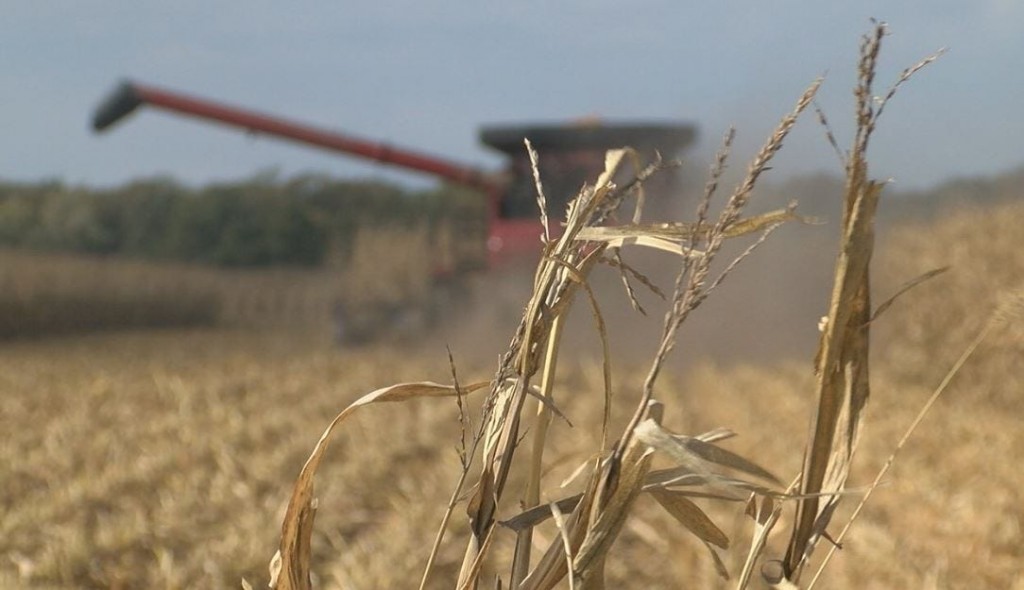
“It’s definitely time to get them out,” he said from inside his Case IH combine, as he cut soybeans north of Grand Island.
And getting them out is what he’s doing, spending long days on the combine to make up for lost time.
He said, “It looks like we got a good window here to get things done so we’re going to take advantage of that and hit it as hard as we can.”
Early in the summer, it looked like drought was creeping back, but that changed in a big way.
“It was a good summer as far as rainfall, on the front side and backside is the complications,” Kowalski said. “That’s just a part of farming.”
He works with a neighbor, Artie Moeller, trying to share labor and equipment.
“It’s all about keeping the equipment you have moving and if you don’t have enough guys to drive everything, then it’s just capital sitting around and Artie and I teamed up this spring and said if we can grow a grow a bushel of corn for a little less money, that gives us that much more on the backside,” Kowalski said.
Adjusted for inflation, the USDA says this will be the second worst income year on the farm since 2002.
Farm income is about half what it was six or seven years ago, so as combines roll, it’s not all about the size of the crop.
“It’s all about what it cost to grow that bushel, not how many bushels you actually get,” Kowalski said.
Nebraska Extension tells farmers to be watching for stalk and quality issues, because the longer crops are in the field with wet conditions, the greater the chance of problems.