Lebanon’s prime minister visits shattered border village as deal with Israel begins
BEIRUT (AP) — Lebanon’s prime minister visited Wednesday a battered southern village as the implementation of a Washington-brokered Lebanese-Israeli agreement began, following months of war between Israel and the Iran-backed Hezbollah.
The latest conflict started March 2, when the Lebanese militant group fired rockets toward Israel after the U.S.-Israeli February attacks that set off the Iran war. In response, Israel launched an aerial campaign and ground invasion in Lebanon, killing more than 4,000 people and displacing 1.2 million others.
The two sides, technically in a state of war nearly 80 years after Israel’s establishment, started rare direct talks championed by Washington.
They reached an agreement by late June, setting a plan for the deployment of Lebanese military forces in areas in southern Lebanon, where Hezbollah had a military presence and influence, and the withdrawal of Israeli forces, while disarming the militant group.
Hezbollah has refused the talks and disarmament calls.
Lebanese government vows to rebuild and take control
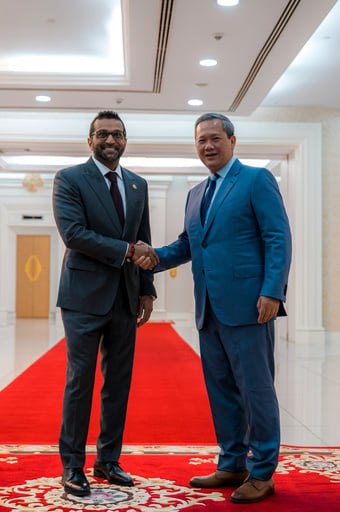
Nawaf Salam’s visit to Zawtar Al Gharbieh came a day after President Joseph Aoun’s landmark White House meeting with U.S. President Donald Trump, who made a surprise announcement, allowing American carriers to resume direct flights to Lebanon for the first time in 40-plus years.
Salam, alongside Lebanon’s defense minister and senior military officials, pitched a Lebanese flag near a destroyed building in the town, vowing the government will start rebuilding destroyed homes and infrastructure.
“We have insisted since the beginning that our goal is the complete Israeli withdrawal from all our territory,” Salam said. “What we are seeing today is just the beginning, but we remain determined and steadfast, and will continue to mobilize all political and diplomatic efforts to secure a full withdrawal from all of Lebanese territory.”
The army did not immediately allow civilians to enter as they cleared unexploded ordnance. Residents tried to storm the barrier in a desperate bid to enter the village and check on their homes and properties.
Some expressed frustration, downplaying the army’s deployment.
“The prime minister should have informed people that he was going to Zawtar and he should have taken the people, who have been waiting for the past two days, with him,” said Zaynab Ismail, a resident.
The agreement’s implementation begins with ‘pilot zones’
Lebanon and Israel agreed to establish two “pilot zones” in a series of villages in southern Lebanon where the Israeli military is to turn over control to the Lebanese army after clearing the areas of any Hezbollah presence.
Israel hasn’t occupied any of the newly assigned zones in the latest conflict, though it has struck them and conducted ground operations. The Lebanese army has a limited presence there.
Trump, in his meeting with Aoun, did not address the “pilot zones” entering their implementation phase, but pledged to support Lebanon without going into details.
Aoun and the Lebanese government have urged the international community to invest in the Mediterranean country and its army to help rebuild its infrastructure and military capacity.
Lebanon’s top political leadership has criticized the group for dragging the country into another war, but also condemned Israel for its widespread bombing and ground invasion.
Hezbollah has condemned the government for holding direct talks with Israel and rejected the agreement, but the militant group has not tried to sabotage it through military means. Its leadership believes Israel cannot be pressured to withdraw its troops by diplomatic means only, and that Lebanon lacks the leverage of its key ally Iran in negotiations.