Study says wide-scale irrigation lowers local precipitation
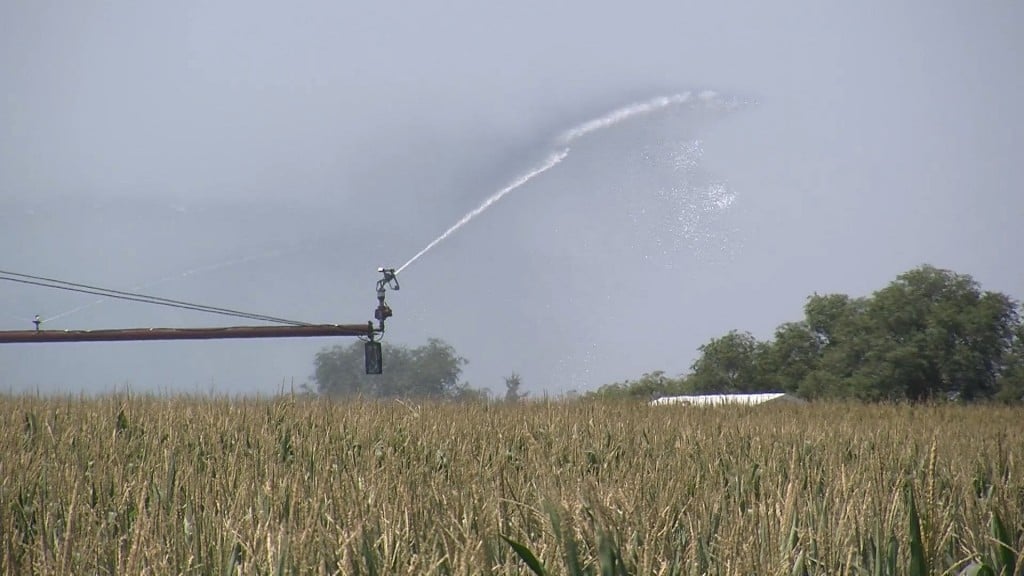
You’ve seen the large sprinklers on farm fields: irrigation feeding water to crops.
But do they actually cause less rain in the state?
Dr. Joe Szilagyi is a research professor of hydrology at UNL.
He recently published a study showing widespread irrigation has resulted in moisture loss in Nebraska.
"The more intense the irrigation, the larger the drop in precipitation rates," Dr. Szilagyi said.
He said they’re seeing less precipitation in the more heavily–irrigated areas of the state.
How is this possible?
Dr. Szilagyi believes more of the water is evaporating into the air.
More evaporation cools the surface and air, making it more difficult to produce rain.
"You take away moisture, water from the land because this extra moisture that is pumped into the air will be carried away from the area by the prevailing winds and it will create rain downwind," he said.
That’s more rain for Iowa, Illinois and Indiana.
He said that has long–term implications for Nebraska, like less water for crops, and possibly for livestock too.
Dr. Szilagyi said farmers currently water their crops more than necessary and that based on these findings, they should only use the necessary amount
He stressed that’s only a suggestion to farmers and said more studies are needed to confirm his findings.