Controllers warned Marine One pilots about communication issues week before dual takeoff, NTSB says
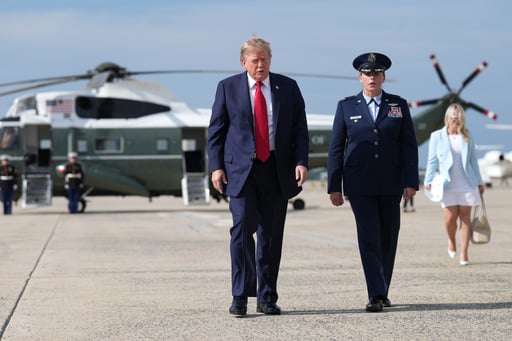
Air traffic controllers in Washington and the pilots of President Donald Trump’s helicopter met to discuss communication issues one week before a jet and the chopper were allowed to take off at the same time, the National Transportation Safety Board said Thursday.
Both sides met to discuss the failures in communications and agreed to an alternative for such occasions — but that method was also unsuccessful on the day of the Aug. 4 incident at Ronald Reagan Washington National Airport, the National Transportation Safety Board’s preliminary report shows.
Having both in the air at the same time seemed to violate safety procedures put in place after last year’s midair collision near the busy airport that killed 67 people, but officials stressed the president was never in danger. The Pentagon also has a longstanding agreement with the FAA to provide controllers with a three-minute warning before the president’s helicopter takes off that predates last year’s crash.
The FAA decided after an airliner collided with an Army Black Hawk helicopter on Jan. 29, 2025, that all takeoffs and landings at the airport would be halted anytime a helicopter passes by on a conflicting route. The airspace near the White House and Reagan is heavily congested with military and commercial aircraft.
The FAA has acknowledged that the helicopter and airliner briefly got too close before the two aircraft started to move away from each other. The airplane quickly climbed above the helicopter after Marine One’s pilots saw the plane and paused until it safely left the area.
Tower audio suggests that the air traffic controller may not have realized that Trump’s helicopter was getting ready to head to Andrews Air Force Base with the president aboard that day until right as Marine One was taking off.
A recording posted by ATC.com showed the Marine One pilot telling the tower that the helicopter was “three minutes to life” just like the 2013 agreement between the FAA and the military calls for. But the air traffic controller said that transmission appeared broken and unreadable on his end, so the controller seemed surprised a few minutes later when the helicopter took off.
“Uh, Marine One, you said, uh, you’re proceeding as briefed?” the controller asked before giving the helicopter directions and commenting, “OK, no three minutes, roger, proceed as briefed.”
After the controller warned the helicopter about the plane taking off, the Marine One pilot said he saw the traffic and declared, “We’ll be doing a momentary delay.”
After last year’s midair collision, it became clear that poor communication between air traffic controllers and the military had been a longstanding issue. During a congressional hearing, it came out that a hotline connecting the Pentagon to the tower at Reagan hadn’t been working for more than three years, and the FAA hadn’t even realized it.