Toxic Blue-Green Algae Alert Issued for Big Indian Lake, Cub Creek Lake
AI assisted with this article. All content is reviewed, edited, and approved by our editorial staff before publishing.
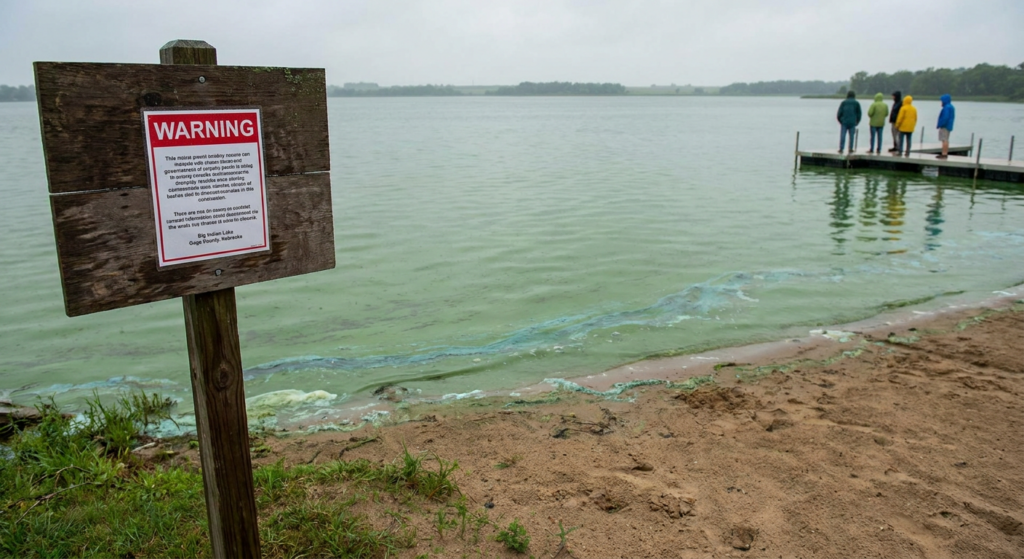
LINCOLN, Neb. — State environmental officials have issued a health alert for toxic blue-green algae at Big Indian Lake in Gage County and extended an existing alert for Cub Creek Lake in Jefferson County, the Nebraska Department of Water, Energy, and Environment announced Monday.
Meanwhile, Rockford Lake in Gage County has been removed from the health alert list after being placed on alert last week, according to the department.
Water samples collected earlier this week at Big Indian Lake and Cub Creek Lake measured above the state threshold of 8 parts per billion of total microcystin. Microcystin is a toxin released by specific strains of blue-green algae, also known as Harmful Algal Blooms or HABs.
When a health alert is issued, designated swimming beaches at the affected lakes are closed and warning signs are posted to advise visitors to use caution. Recreational boating and fishing are still allowed, but state officials urge the public to avoid contact with the water and specifically avoid any activity that could result in swallowing water.
Officials also warned visitors not to allow pets to enter the water or drink from the lakes. Public areas surrounding the lakes remain open, allowing visitors to continue camping, having picnics, and taking part in other outdoor activities.
Weekly monitoring has been underway at 57 public lake sites across Nebraska since May 18, 2026, and will continue through Sept. 14, 2026. State personnel conduct testing early each week at public lakes that feature swimming beaches and high levels of visitor activity. Sampling results for microcystin and bacteria are updated every Friday on the DWEE home page. The public can also review weekly data and use an interactive Beach Watch map on the department’s Beach Watch webpage.
DWEE noted that toxic blooms can potentially form in the time between sample collection and reporting, advising people to remain cautious if they notice signs of algal blooms. Harmful blooms may also occur in other unsampled lakes throughout Nebraska. Information regarding what to look for, potential health effects, and prevention steps can be found on the HAB Fact Sheet on the agency’s website.
The state’s testing efforts involve multiple partner organizations, including the Central District Health Department, the Nebraska Public Power District, the United States Army Corps of Engineers, and seven Natural Resources Districts: Upper Republican, Lower Republican, South Platte, Middle Niobrara, Lower Loup, Nemaha, and Lower Elkhorn.