‘It’s a normal year’, Experts weigh in as bat population declines despite increase in sightings
LINCOLN, Neb. (KLKN) – After a bat with rabies was found in Cherry County on Thursday, concerns over bat sightings have risen.
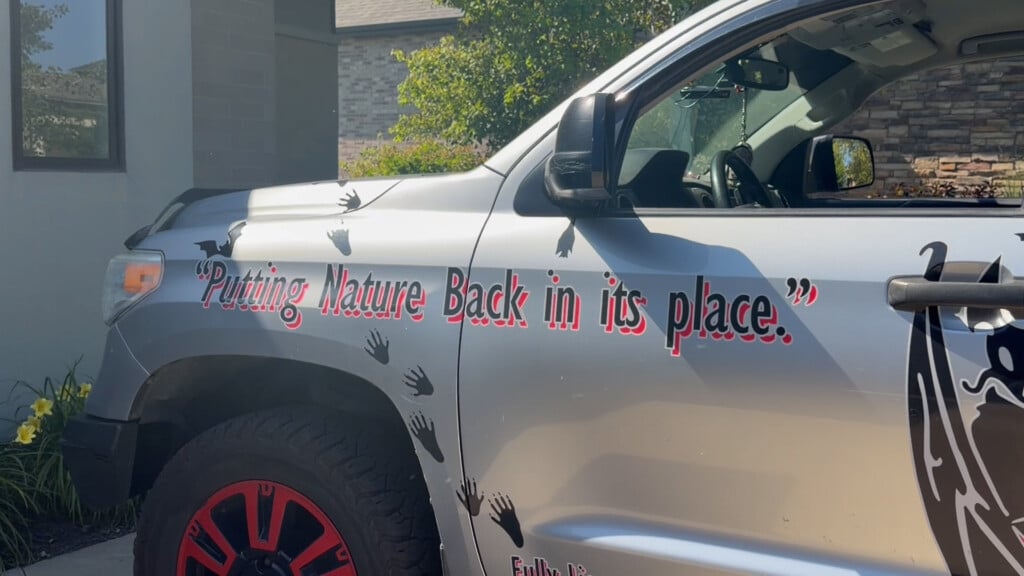
Tony Skov, owner of Critter’s Wildlife Management, says a rise in bat sightings does not mean a rise in their population.
As a bat removal specialist, Skov says this time of year, bats are simply more visible.
“I haven’t seen an increase or decrease. It’s a normal year for me,” he said.
“June and July are the birthing months. Bats only have one baby, maybe twins, per year. We need the bats. Bats kill, eat 1,000 to 5,000 mosquitoes every single night. Without them, we would be in trouble,” he said.
Skov has been helping homeowners remove the bats that creep into their homes through small spaces, over 16 years.
He says there are specific patterns and cycles the bats follow, however, it small crevices aren’t properly closed up then the bat colony can get out of hand.
Shaun Dunn is also familiar with the ways of wildlife as a zoologist with Nebraska Game and Parks.
He says there has actually been a decrease in bat populations nationwide due to a fungal outbreak called White Nose Syndrome.
Dunn says the outbreak started in New York and has not been as prevalent in Nebraska at this time.
He says the rabies case confirmed in Cherry County is actually within normal stats for Nebraska, with a total of 20 cases logged in 2026.
Dunn adds that if a decrease in the bat population was to continue it would actually be a real travesty.
“They eat a lot of different insects and keeping those insect populations in check not only help prevent the spread of diseases, but also helps out farmers maintain their crops,” he said.
“Then, they don’t have to use as many pesticides on them. That saves them money.”
He goes on to say, “A lot of people will get kind of upset or even scared when they see a bat, but most of the time the bat’s just trying to find home place to hibernate, to roost for the night. They’re not trying to impact humans in any way.”
Dunn says one to three percent of bats can carry rabies, so if you think you have bats in your home, attic or wherever else, it’s best to leave the removal up to the experts.