Walz Discusses Property Tax Relief as Nebraska Farmers Share Concerns
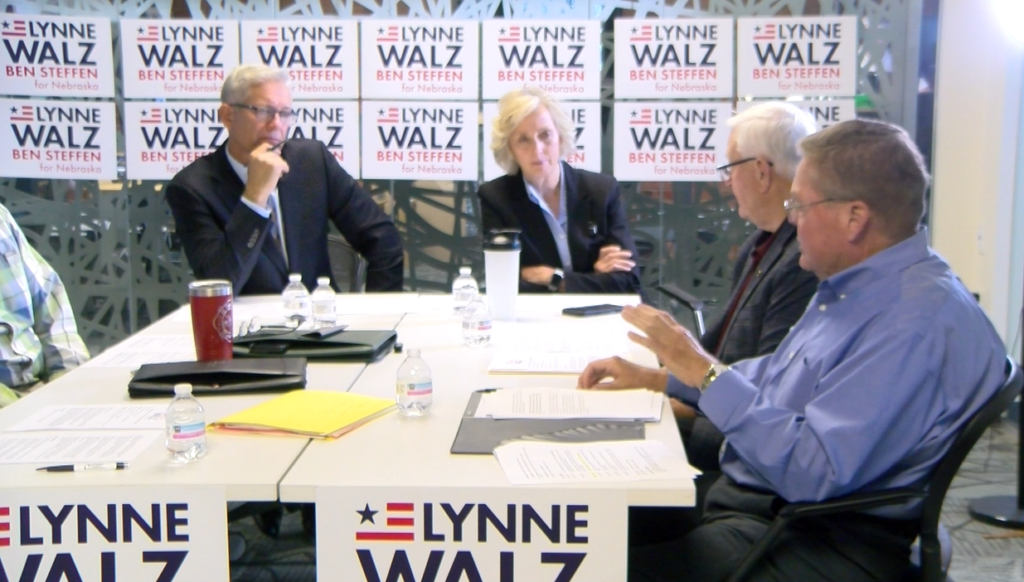
LINCOLN, Neb. (KLKN) — Democratic candidate for Nebraska governor Lynne Walz and her running mate, Ben Steffen, met with farmers and policy experts Friday to discuss rising property taxes and potential solutions.
The roundtable, held at FUSE Coworking in Lincoln, focused on the financial burden facing Nebraska homeowners, farmers and businesses, as well as the challenges of providing long-term property tax relief.
Retired farmer and former school board member Dennis Schuster said rising property valuations are putting additional pressure on agricultural producers.
Schuster said he expects his property tax bill to increase by nearly $20,000 this year.
He also expressed concerns about younger farmers who are trying to establish their operations while managing increasing expenses.
Steffen said the roundtable was an opportunity to hear directly from those affected by property taxes.
“That’s why we’re here today. We want to listen. We want to listen to farmers and folks who know this issue inside and out,” Steffen said.
Walz discussed several approaches she would consider if elected governor, including restoring the state’s school aid formula and expanding the homestead exemption.
“As governor, I want to be able to restore the school aid formula and expand the homestead exemption,” Walz said. “With every dollar of relief going to Nebraska homeowners, farmers, and small businesses.”
The discussion also included criticism of Republican Gov. Jim Pillen’s approach to property tax relief.
Walz and Steffen questioned whether his administration has delivered on its goal of reducing property taxes by 40%.
Steffen also raised concerns about Nebraska’s budget outlook, pointing to the state’s shift from a $1.2 billion surplus to a projected $846.7 million deficit in the upcoming two-year budget period.
Nebraska Farmers Union President John Hansen said the state’s reliance on property taxes to fund public education places an additional burden on agricultural producers.
He also expressed concerns about proposals to increase sales taxes, arguing that those changes could disproportionately affect younger families.
Farmer and cattleman Bill Armbrust said Nebraska agricultural producers face higher property taxes than farmers in neighboring states, making it more difficult to compete.
He said property taxes on high-quality agricultural land in Nebraska can range from $65 to $120 per acre, compared with lower amounts in surrounding states.
The discussion also addressed the financial challenges associated with providing property tax relief.
Tom Bergquist, former director of the Nebraska Legislative Fiscal Office, estimated the state would need to provide approximately $200 million in additional support each year just to prevent property tax collections from increasing.
Bergquist explained that even relatively small increases in property tax collections would require substantial additional state funding to offset.
He also emphasized the difference between direct state aid, which can reduce the amount of property taxes levied, and tax credits, which reduce the amount taxpayers ultimately pay.
While several ideas for property tax relief were discussed, how those changes would be funded remains a question.
Walz said she wants to bring stakeholders together to help develop an approach that provides lasting property tax relief for Nebraskans.